
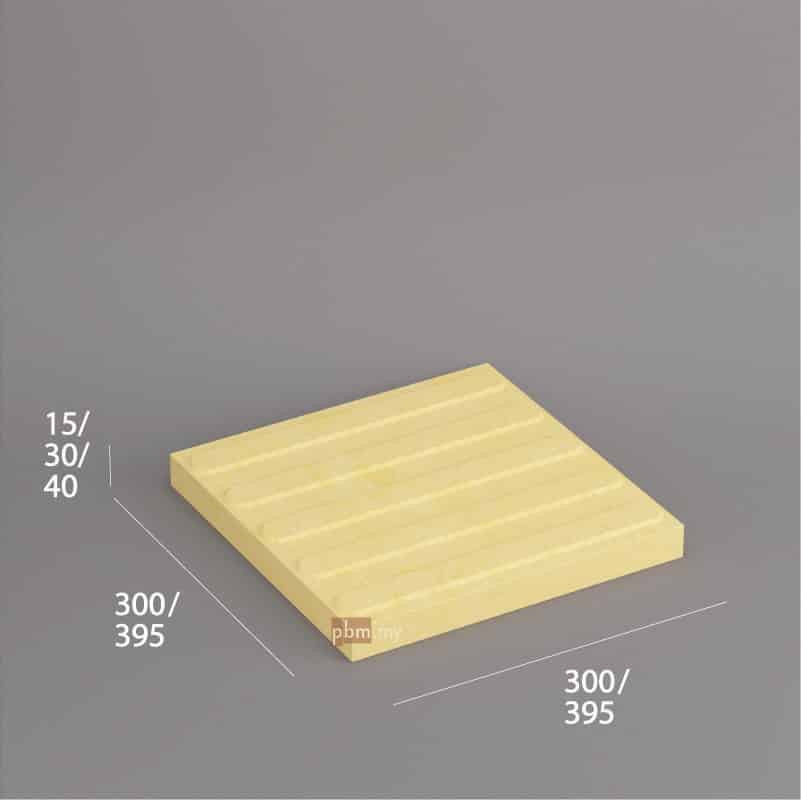
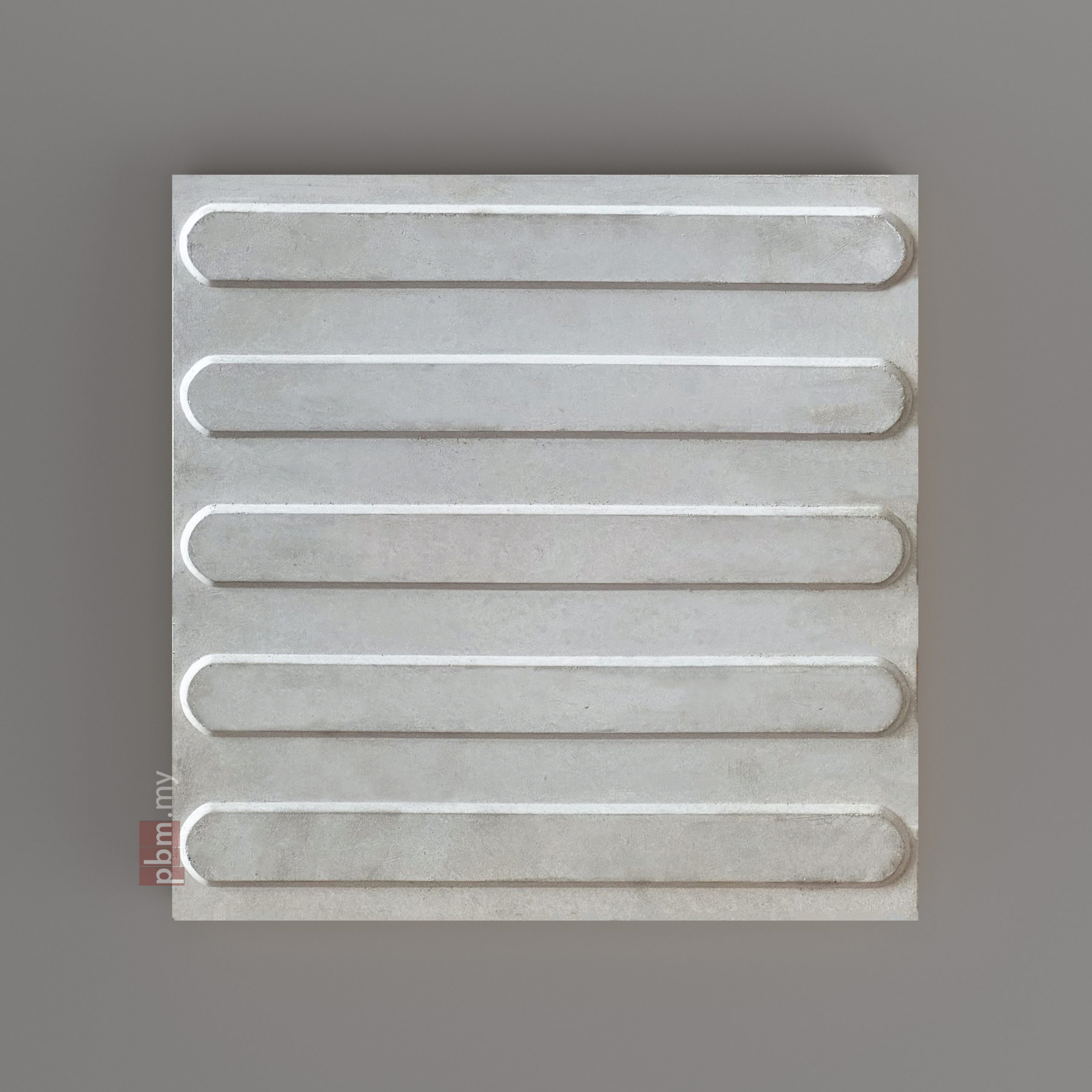
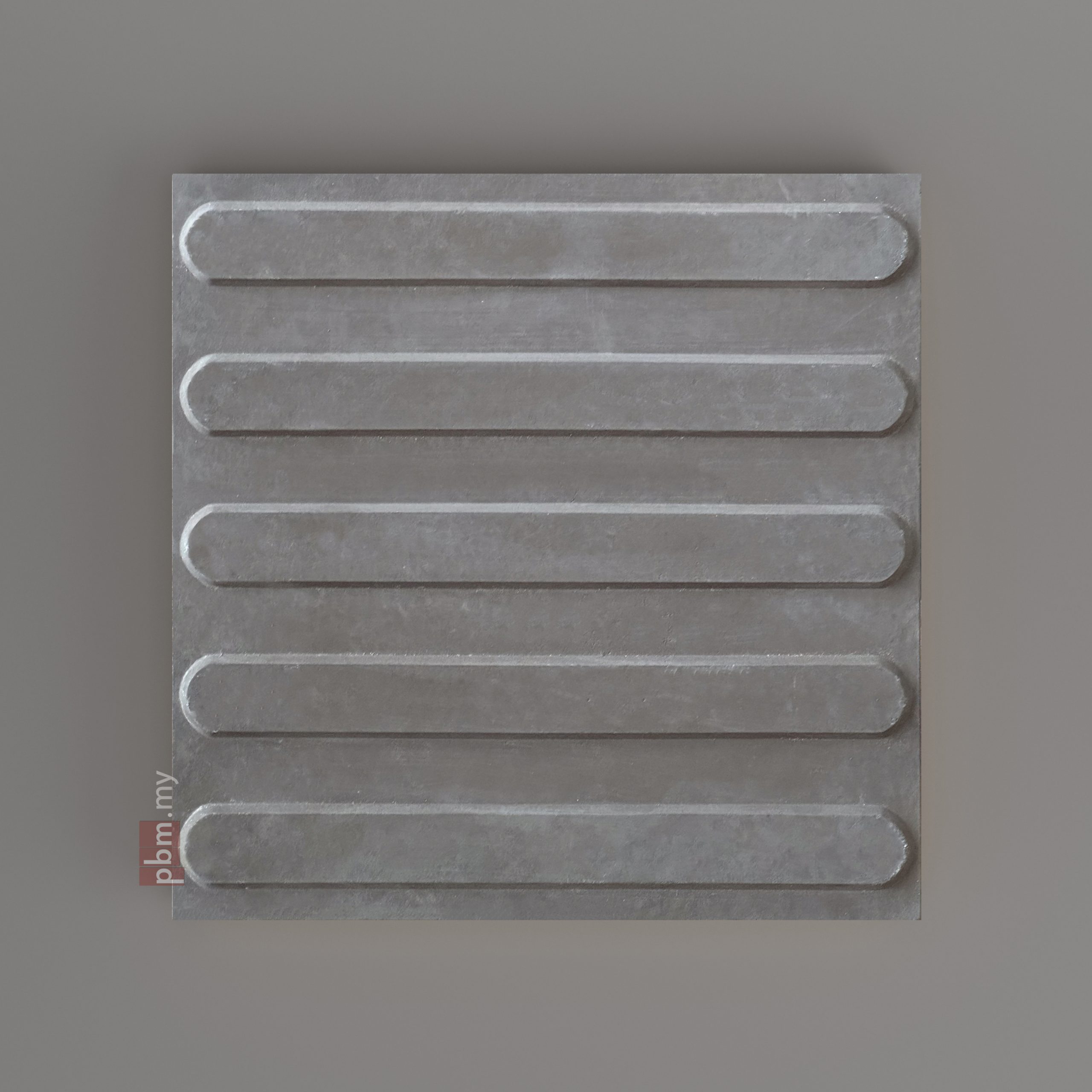
Tactile Paver (Line)

Product Info
Coverage: 11.0 pcs/m²
15mm
±2.5kg/pc · 468 pcs/plt
| Colour | Product Code |
|---|---|
| Grey | ST-R1.15 |
| Black | ST-R2.15 |
| Yellow | ST-R5.15 |
30mm
±5.0kg/pc · 200 pcs/plt
| Colour | Product Code |
|---|---|
| Grey | ST-R1 |
| Black | ST-R2 |
| Yellow | ST-R5 |
40mm
±7.5kg/pc · 150 pcs/plt
| Colour | Product Code |
|---|---|
| Grey | ST-R1.40 |
| Black | ST-R2.40 |
| Yellow | ST-R5.40 |
Coverage: 6.25 pcs/m²
15mm
±7.5kg/pc · 300 pcs/plt
| Colour | Product Code |
|---|---|
| Grey | ST-F1.15 |
| Black | ST-F2.15 |
| Yellow | ST-F5.15 |
30mm
±10.0kg/pc · 140 pcs/plt
| Colour | Product Code |
|---|---|
| Grey | ST-F1 |
| Black | ST-F2 |
| Yellow | ST-F5 |
40mm
±13.0kg/pc · 104 pcs/plt
| Colour | Product Code |
|---|---|
| Grey | ST-F1.40 |
| Black | ST-F2.40 |
| Yellow | ST-F5.40 |
Product Description —
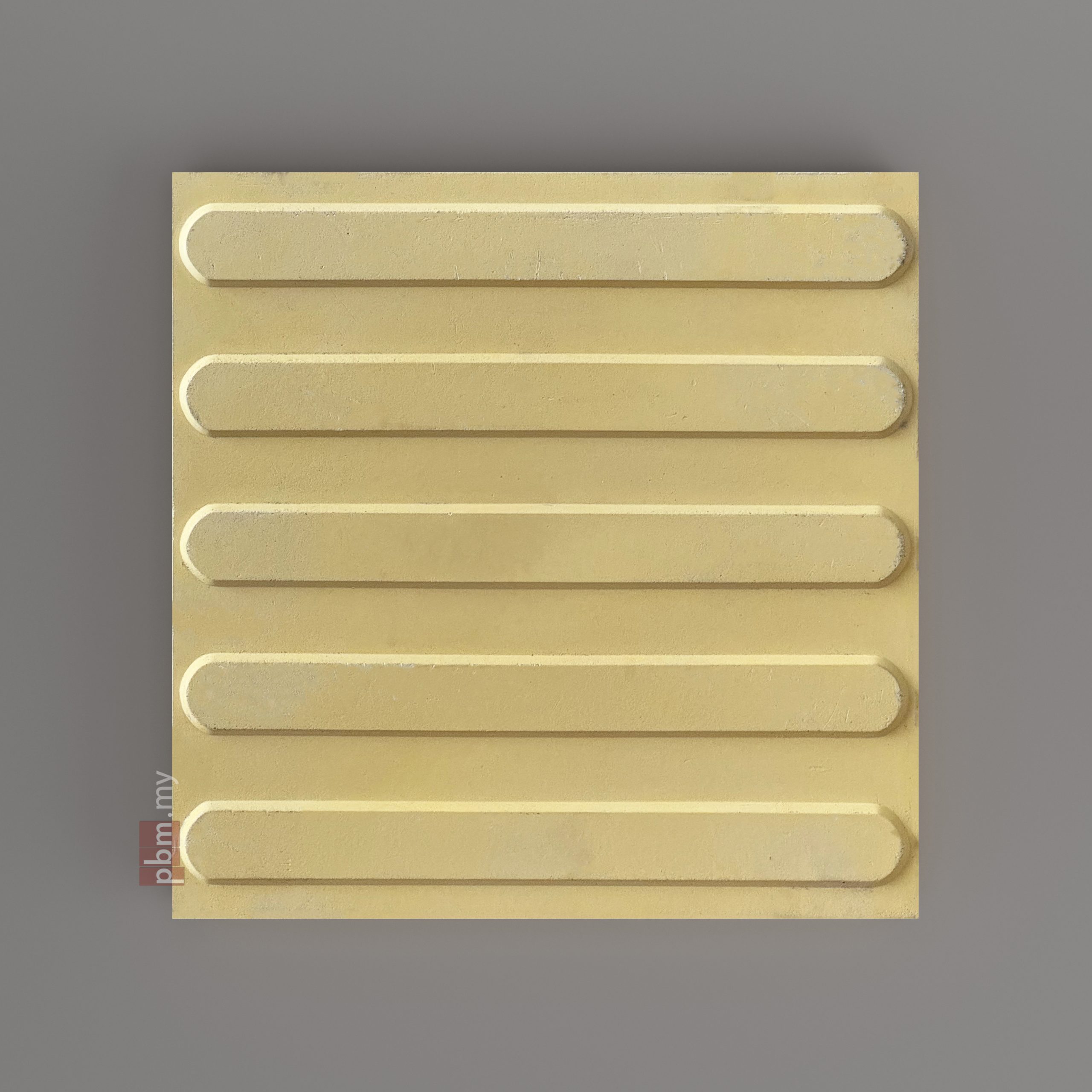
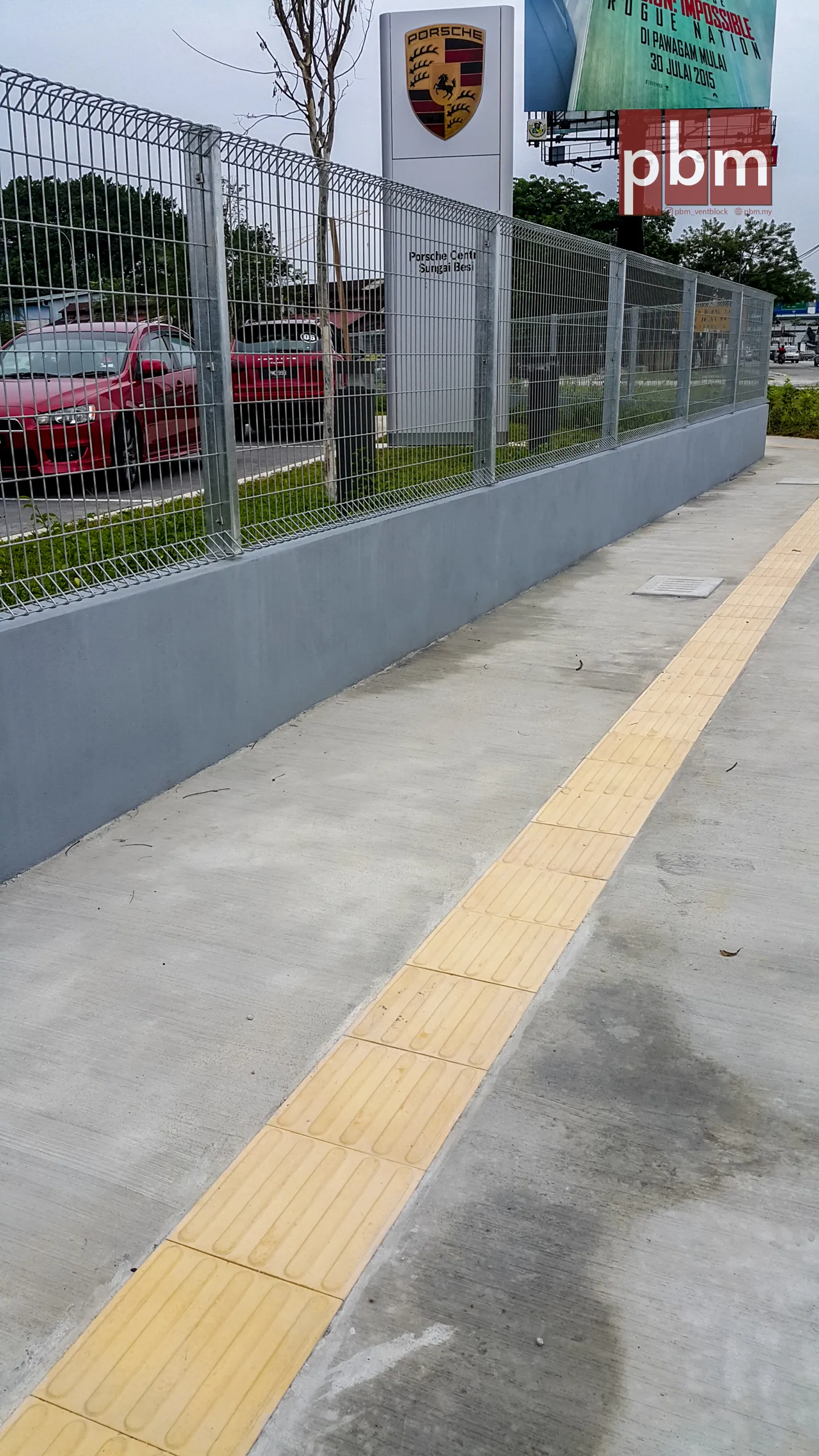
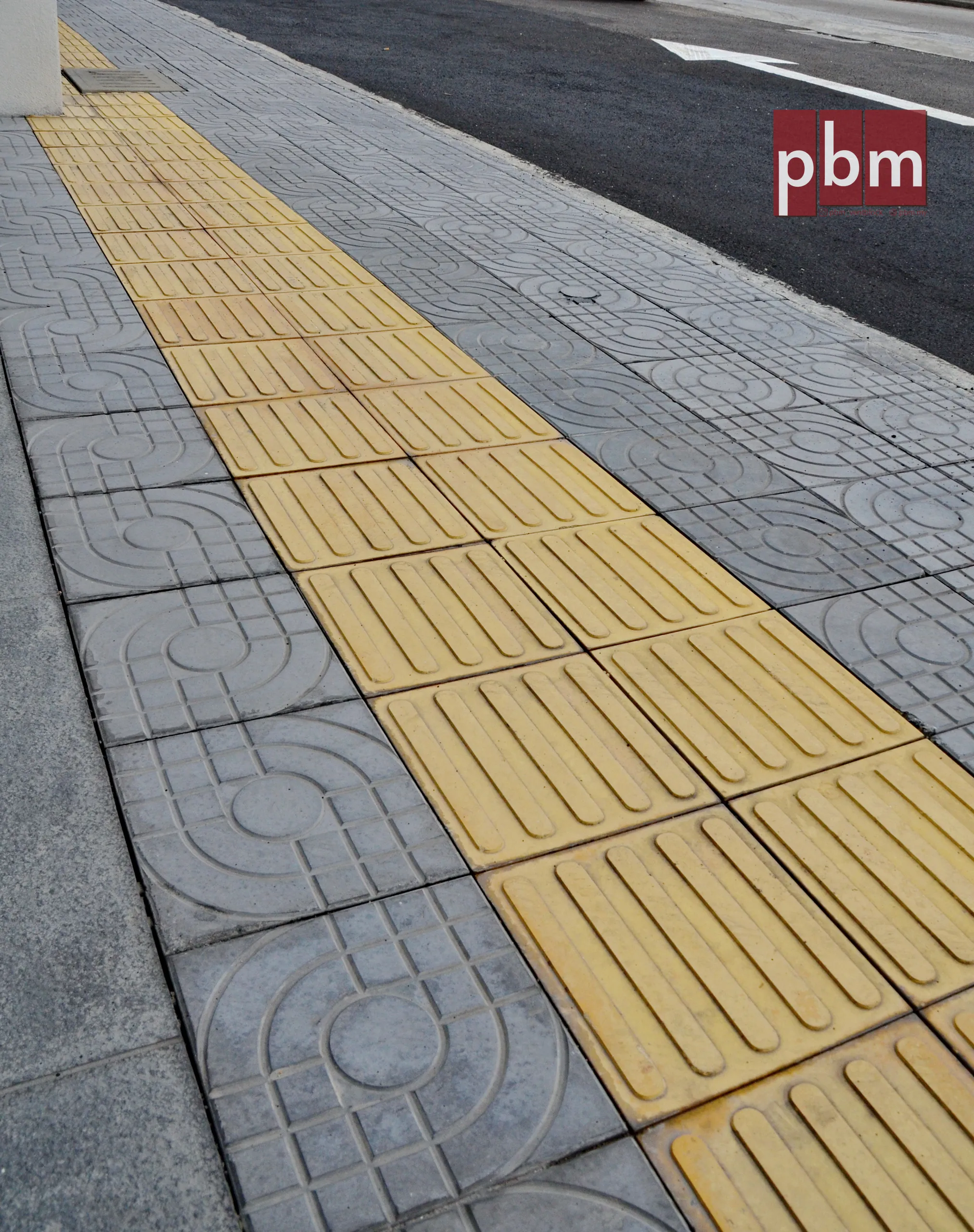
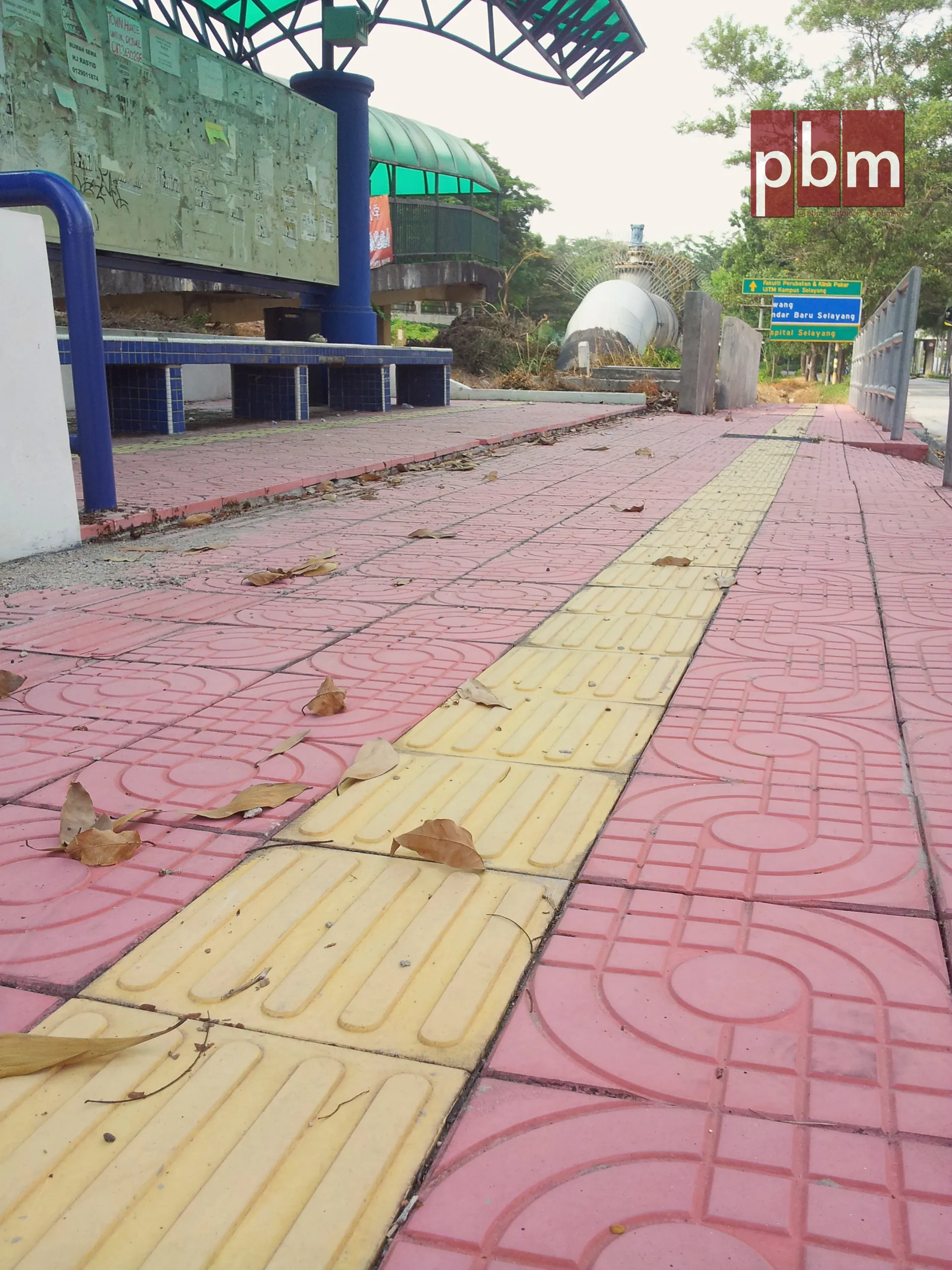
PBM Tactile Paver Line is a precast concrete guidance paver carrying parallel raised bars. The bar pattern indicates a safe directional path for visually impaired pedestrians, providing a continuous tactile route detectable underfoot and via long cane. Common applications include guidance from building entrances to lifts, between transport modes at transit interchanges, and along defined pedestrian routes in public buildings.
Available in 300×300mm and 395×395mm formats, with 15mm, 30mm, and 40mm thickness, and three colour options: Grey, Black, and Yellow. The 15mm option supports surface-mount retrofit installations; 30mm and 40mm support integral installation within new paving systems.
Bars are oriented parallel to the intended direction of pedestrian travel during installation. Yellow is the recommended colour for high-contrast accessibility installations.
Application
- Pedestrian crossings and kerb ramps
- Bus stops and public transport interchanges
- Train station platforms and concourses
- Top and bottom of stairs and ramps
- Lift lobbies and approach zones
- Park and recreational area pedestrian routes
Key Characteristics
- Two profile types for distinct accessibility functions: Dot (warning) and Line (guidance)
- High-contrast yellow option for maximum visual prominence against typical paving surfaces
- Three thickness options (15mm, 30mm, 40mm) supporting both surface-mount and bedded installations
- Two standard sizes (300×300mm, 395×395mm) compatible with most paving module systems
- Manufactured from precast concrete for dimensional consistency and load resistance
- Modular format allowing individual replacement without disturbing the surrounding paving
Downloads —
CAD drawings and technical documents for specification use.
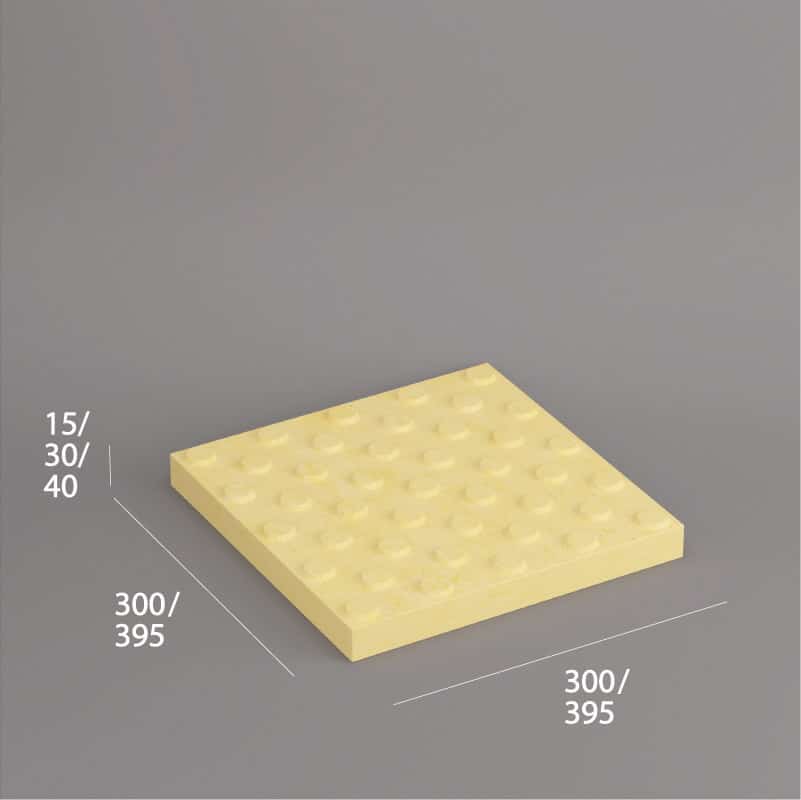
Explore Other Paving Slab Patterns
Installation Notes
- Install as integral pavers within the bedding sand of the surrounding paving system
- Maintain consistent surface level with adjacent paving - tactile units should not protrude or recess
- Maintain 3-5mm joint width between units, consistent with surrounding paving
- Lay Dot units perpendicular to the direction of travel (warning function)
- Lay Line units parallel to the direction of travel (guidance function)
- Verify orientation against project accessibility drawings before bedding
FAQ —
What is the difference between Tactile Paver Dot and Line?
Dot pavers carry an array of truncated domes and serve a warning function – used at locations where visually impaired pedestrians need to be alerted to a change in environment (kerb edges, top of stairs, platform edges). Line pavers carry parallel raised bars and serve a guidance function – used to indicate a safe directional path for pedestrians to follow.
Which colour should I specify?
Yellow is the standard colour for tactile pavers in most accessibility codes because it provides the strongest visual contrast against typical grey or black paving surfaces, which assists pedestrians with partial vision. Grey and Black are available where visual contrast is achieved through alternative means or where a less prominent installation is preferred.
Which thickness should I specify?
15mm is intended for surface-mount retrofit installations, where tactile pavers are bonded to an existing paved surface using adhesive. 30mm and 40mm are intended for integral installation as part of a new paving system, bedded into sand or mortar alongside surrounding paving units. Match the tactile paver thickness to the depth of the surrounding paving.
How do I orient the pavers correctly?
Dot pavers (warning) are typically installed perpendicular to the direction of pedestrian travel — for example, across the width of a kerb ramp. Line pavers (guidance) are installed with the bars running parallel to the intended direction of travel. Always verify against the accessibility consultant’s drawings.
Can tactile pavers be cut to fit irregular spaces?
Yes units can be cut using a wet diamond saw. However, the tactile pattern must remain continuous and detectable across the cut zone. Avoid cutting that would interrupt or significantly reduce the pattern density.
How are tactile pavers cleaned and maintained?
Routine sweeping and washing with water and a stiff brush is sufficient. Avoid acid-based cleaners, which can degrade the surface texture. The tactile pattern should remain clearly defined – replace units where the dome or bar profile becomes worn or chipped.
Note: All concrete pavers require an adequate thickness of well-compacted basecourse to ensure optimal pavement performance and longevity. Tolerance of ± 3mm in product dimension is to be expected. Efflorescence may happen on any cementitious product. Website images for illustration purpose, final selection should be made from actual product samples.